Respirators in pest control: How to protect yourself when applying pesticides

Respirators in pest control: How to protect yourself when applying pesticides
Why do pest technicians need to wear a respirator?
As a professional pest technician, you’re exposed to hazardous airborne contaminants day in and day out. Many of these contaminants can have severe negative effects on your health and cannot be seen or smelled at dangerous levels.
Respirators are designed to protect applicators by filtering out contaminants that could cause temporary or permanent health effects, allowing you to breathe air that is free from contamination.
They are most often needed when working with pesticides in the form of fumigants, liquid sprays and dusts. You should also always wear a respirator when inspecting roof voids and subfloors due to potential hazards like dust, mould and asbestos.
The importance of correctly protecting yourself against these contaminants throughout your working career cannot be overstated.
What contaminants are in my pesticides?
You must always carefully read the label and SDS for each pesticide you use to determine the type of face piece and filter required to protect yourself.
Section 3 of the SDS for each chemical lists all the hazardous ingredients it contains.
In Section 8 of the SDS, the manufacturer details the minimum personal protective equipment that is required when handling the product. They may also recommend specific filters for the contaminants in the chemical.
What types of respirators are best for pest technicians?
There are various types of respirators that are suitable for pest technicians, including disposable respirators, reusable respirators and self-contained breathing apparatuses.
Disposable respirators, also known as filtering facepieces, are used to protect against particles such as dust, mist and fumes. They do not provide protection against gases or vapours. These lightweight respirators require no maintenance as they are discarded after use.
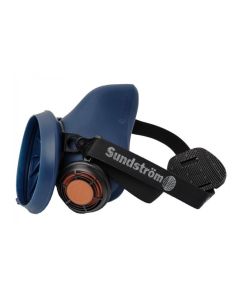
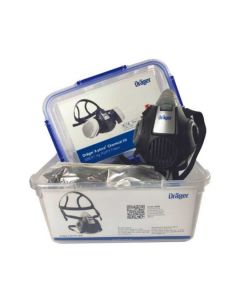
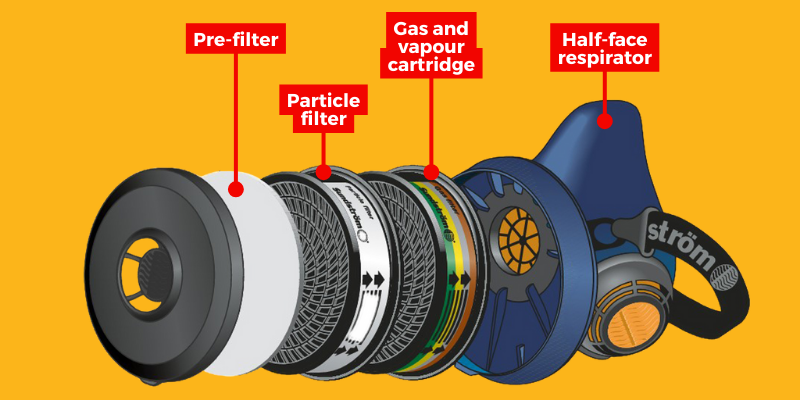
Reusable respirators consist of a facepiece that is used in conjunction with particulate filters, gas and vapour cartridges, or combination cartridges which must be regularly replaced to ensure continued effectiveness.
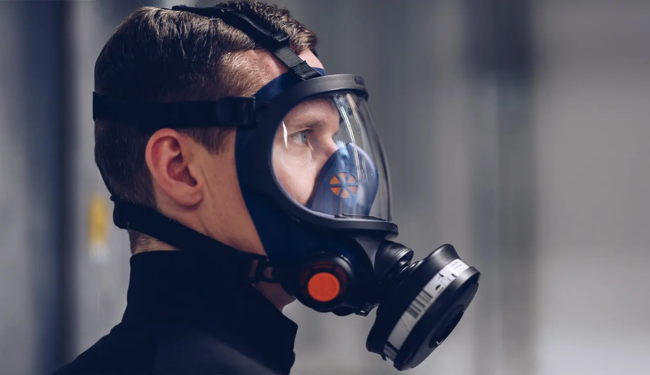
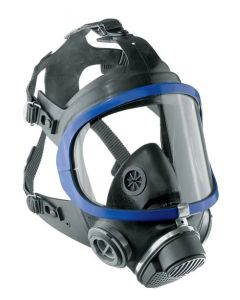
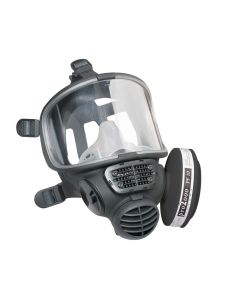
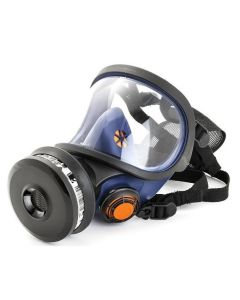
They are available as half-face respirators which cover the lower half of the face, including the nose and mouth, or full-face respirators which offer a higher level of protection as they seal around much of the face, including the eyes, and can sometimes replace the need for safety glasses.
Make sure to have your respirator facepiece fit-tested to ensure that it fits tightly and adequately seals around your facial features.
Self-contained breathing apparatus (SCBA) are different from other types of respiratory equipment as with these, the user carries the source of clean air with them in a tank. This type of respirator is used in situations when concentrations are unknown or when the hazards are so toxic that they are ‘immediately dangerous to life or health’ (IDLH).
How to choose the right filter for my pest control job?
Each filter will only filter out the specific contaminants that it is designed to protect against – for example, a filter that protects against acetone will not protect you against ammonia.
Filters must also be matched to the product form (e.g. particulate, gas or vapour) that the chemical you’re applying is in. Particulate filters only protect you against particles and gas filters only protect you against gases and vapours. If the atmosphere you are in contains a mixture of particles and gases, then you must use both filter types in order to protect yourself. Some filters integrate both particulate plus gas/vapour filtration into one unit – these are known as combination filters or combination cartridges.
Particulate Filters
Particulate filters trap solid and liquid particles that are suspended in the air, such as dust, mists and aerosols. In Australia, there are 3 different classes of particulate filters:
- P1 Particulate Filters filter at least 80% of airborne particles. They are used against mechanically generated particles (e.g. silica, wood dust).
- P2 Particulate Filters filter at least 94% of airborne particles. These are used against mechanically and/or thermally generated particulates (e.g. sprays & mists, fertiliser, bushfire smoke).
- P3 Particulate Filters filter at least 99.95% of airborne particles. These are used for protection against highly toxic or highly irritant particulates (e.g. organophosphate insecticides, asbestos).
Note that P3 classification can only be achieved when the filter is worn with a full facepiece. Particulate filtering facepieces that cover just the nose and mouth area can only achieve a P1 or P2 classification.
Gas and Vapour Cartridges
Gas and vapour cartridges are designed to filter out harmful chemicals, gases and vapours in the air by chemically reacting with or absorbing them to neutralise their effects.
Gas and vapour cartridges are distinguished by their filter type and class and are labelled with a specific colour. There are single gas filters which protect against one type of gas or vapour (e.g. E filters), as well as multiple gas filters (e.g. ABE filters). See AS/NZS 1715 for a comprehensive list of filter types and what they are used for.
Some commonly used gas filter types are:
- Filter type A protects against organic gases and vapours with a boiling point above 65°C. Cartridge label colour: Brown
- Filter type AX protects against organic gases and vapours with a boiling point below 65°C. Cartridge label colour: Brown
- Filter type B protects against inorganic gases and vapours (e.g. chlorine, hydrogen sulphide) but not against carbon monoxide. Cartridge label colour: Grey
- Filter type E protects against acid gases like sulphur dioxide and hydrogen. Cartridge label colour: Yellow
- Filter Type ABE protects against certain organic vapours and acid gases, and sulphur dioxide. Cartridge label colour: Brown, Grey & Yellow
- Filter type K protects against ammonia and organic ammonia derivatives. Cartridge label colour: Green
- Filter type ABEK protects against certain organic vapours and acid gases, sulphur dioxide and ammonia. Cartridge label colour: Brown, Grey, Yellow & Green
Similar to particulate filters, there are 3 classes of efficiency for gas filters based on their capacity, or concentration of gases that they can effectively filter:
- Class 1 filters gas concentrations of less than 0.1% by volume. These are the lowest capacity filters for half masks – e.g. A1
- Class 2 filters gas concentrations of between 0.1% and 0.5% by volume. These are medium capacity cartridges – e.g. ABEK2
- Class 3 filters gas concentrations of between 0.5 and 1% by volume. These have the largest capacity – e.g. large-capacity canisters worn at waist-level
At an equivalent ambient concentration level, a class 3 filter will operate for longer than either a class 2 or a class 1 filter.
--
Respirators and other Personal Protective Equipment (PPE) are your last line of defence against pesticide exposure. Remember to strictly comply with the directions on the label and SDS to ensure that your exposure to dangerous chemicals is sufficiently controlled and stay safe on the job by shopping respirators and filters from Globe Pest Solutions in-store and online now.
Related Posts
How to Maximise Your Sprayer's Performance with Regular Cleaning
Choosing the Best Nozzle Spray Pattern for Pest Control
Understanding Spray Pressure, Flow Rate, Droplet Size and More
Cleaning and Maintenance Tips to Maximise Spray Nozzle Performance